
Pin down where it hurts, what it feels like and when it starts: those three details tell you whether to look at your position, your saddle or your shorts first. Adjust one thing at a time.
Buying another saddle is tempting, especially when the last one cost money and still hurts. But how the saddle meets your body depends on your position, the saddle’s shape and your clothes. A saddle that was comfortable for years can start to hurt when any of those change.
What kind of saddle pain are you feeling?
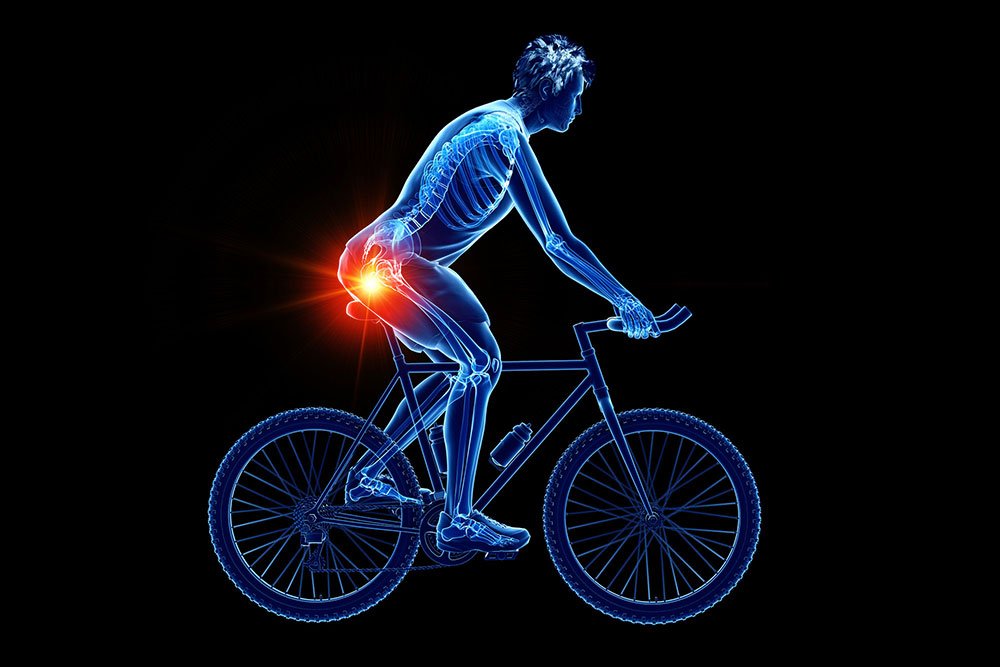
Three clues matter most: location, sensation and timing. A dull ache under your sitting bones sends you to different checks than burning along your inner thigh or numbness at the front of the saddle.
Notice whether the discomfort starts the moment you sit down, builds over a long ride, shows up on an indoor trainer or stays after you dismount. A new symptom on a bike that used to feel fine counts too.
| Where or what you feel | What to check first | If it’s more than that |
|---|---|---|
| Dull ache beneath the sit bones | Did your saddle or position change recently? Notice where the rear of the saddle supports you. | Pain that worsens or persists: see a doctor. |
| Pressure at the vulva or perineum | Look at recent saddle tilt or handlebar changes, and whether you slide toward the nose. | Numbness: stop riding. See a doctor if it recurs or persists. |
| Tingling or genital numbness | Stop the ride. Note where it is, when it began and whether feeling returns after you get off. | See a doctor if it recurs or persists. |
| Burning along an inner-thigh crease | Off the bike, compare the rubbed spot with pad edges, seams and folds. | Don’t ride on broken or worsening skin. |
| Pain near the pubic bone or tailbone | Notice how you sit and whether your support shifts toward that spot. | Pain that persists off the bike: get it assessed. |
| A visible sore or swollen, damaged skin | Inspect the area. Skip the test ride. | Worsening redness, warmth, swelling, pus or fever, or no improvement: get medical care. |
Find your symptom in the table and run that check first. Pain often has more than one source.
Stop the painful ride: An open or worsening sore, recurring numbness, or pain that continues away from cycling means you need a different next step. Increasing redness, warmth, swelling, pus or fever are reasons to contact a healthcare professional, in line with Cleveland Clinic’s saddle-sore guidance.
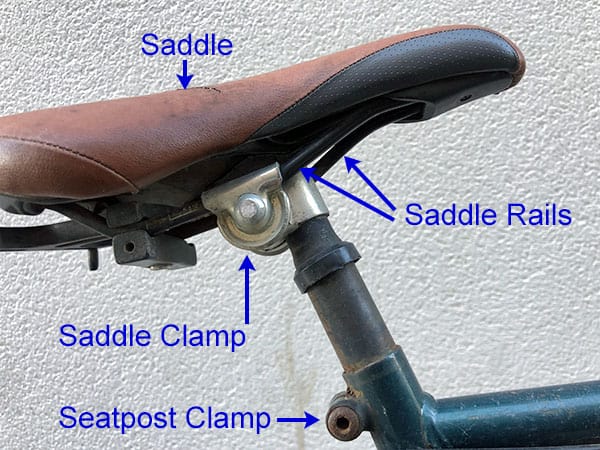
Your sit bones are the bony supports beneath your pelvis. The vulva is the external genital area, and the perineum is the stretch between the genitals and anus. Use those words with a fitter or doctor, because “groin pain” hides where the pressure actually is.
Pressure builds where your weight rests on the saddle, and a change in posture moves that load forward or back. Friction comes from skin, seams or chamois moving against each other, and moisture makes it worse. Both can happen on the same ride, so a pressure spot and a rubbed patch each need their own check.
Check bike position before blaming the saddle
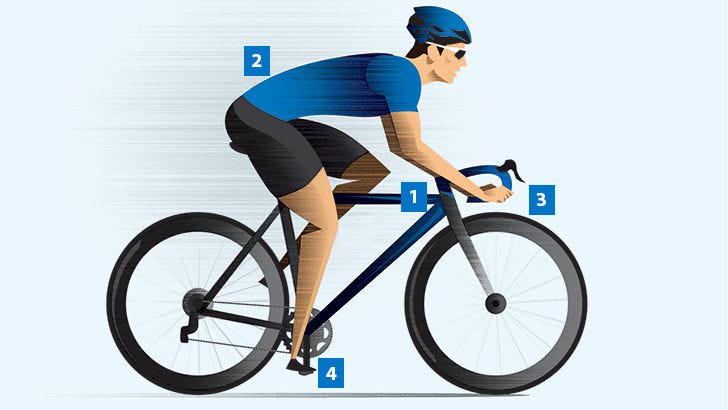
How the saddle meets your body depends on how the whole bike positions you. Before you replace anything, look for what changed: a saddle that slid on its rails, a new handlebar setup, a different bike, or a position that makes you reach farther forward.
If the discomfort sits toward the nose, notice whether you feel pushed forward or carry less weight on the rear of the saddle. If it began after an adjustment, name the part that moved. That history gives a fitter a better starting point than “this saddle hurts.”
A 2012 study of 48 competitive female cyclists found an association between handlebars positioned lower relative to the saddle, higher perineal pressure, and changes in some measures of genital sensation. It did not establish that a handlebar change cures numbness. The research is described in Partin and colleagues’ study.
Four parts of the position to inspect
- Saddle height: Has it changed since your last comfortable rides? It sets how you reach the pedals and settle onto the saddle.
- Tilt: Does the front or rear feel unusually prominent, or has the saddle shifted? No single nose-down angle suits every bike and rider.
- Fore-aft position: Look for movement along the rails. It changes how you sit relative to the pedals and handlebars.
- Handlebar height and reach: Do you reach farther or lower than before, and does that coincide with pressure at the front of the saddle?
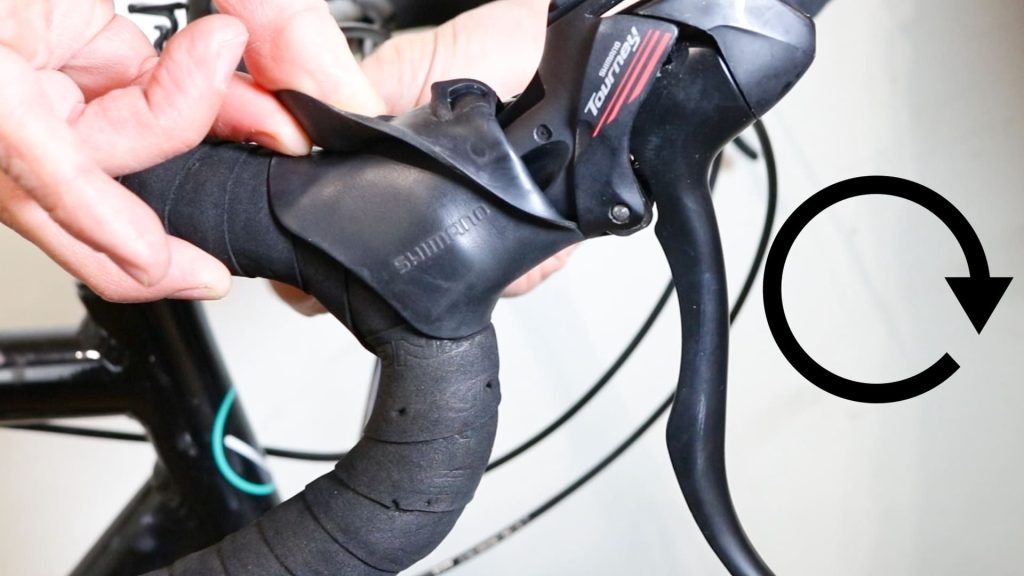
Judge any change against the whole ride. Relief at the saddle doesn’t help if it brings hand pressure, knee discomfort or poor bike control. Leave adjustments you can’t make safely to a qualified fitter, since assembly and torque instructions depend on the bike.
Some riders still hurt after a professional fitting. Treat that appointment as a record of what you’ve already tried, then check the spot that still hurts.
Is the saddle shape supporting you or concentrating pressure?
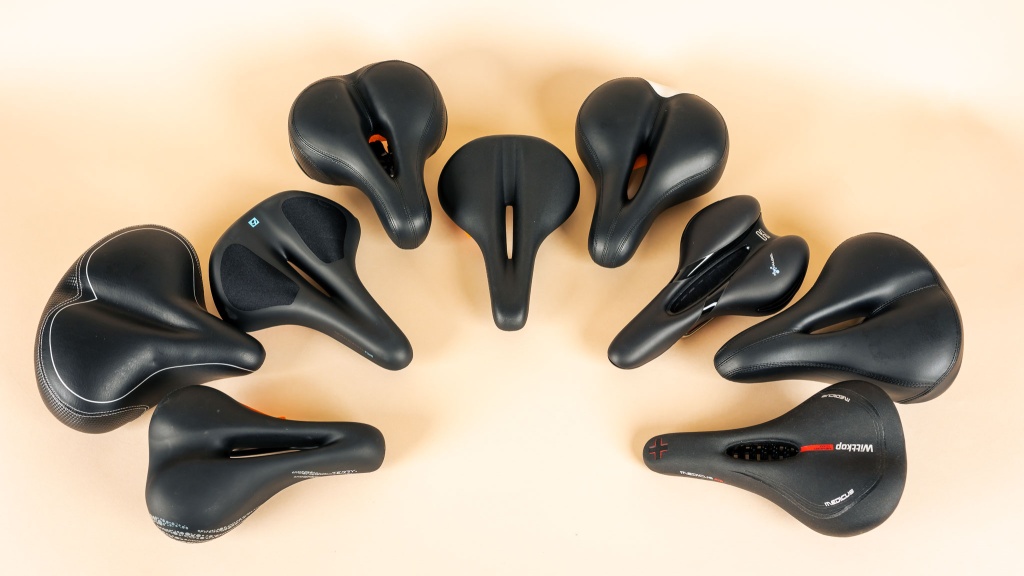
Saddle geometry decides where your weight is supported. The rear carries your sit bones, while the nose and center interact with the front of your riding position. Width, curvature, padding and cutouts all change the contact surface.
If the pressure pattern suggests a shape mismatch, Choose a saddle matched to your pressure points.
A wide rear can support you well in one position and leave less thigh clearance in another. A cutout changes the center, but the edges around it still carry load. A thick pad can feel soft at first contact and still pinch or rub once you pedal.
| Feature | What changes | Trade-off | What to judge |
|---|---|---|---|
| Continuous saddle surface | Support spreads across an unbroken top | Front contact depends on shape and posture | Rear support and perineal pressure together |
| Cutout or center channel | Less direct contact in the center | Pressure may move to the edges | Whether a new pressure spot appears |
| Wider rear support | Different support under the sit bones | Can reduce thigh clearance | Support without inner-thigh rubbing |
| Extra padding | Changes cushioning and the contact surface | More bulk changes where you press or rub | Comfort after pedaling, including new pinching |
Judge front contact and rear support together. A gain in one spot only counts if the rest stays comfortable.
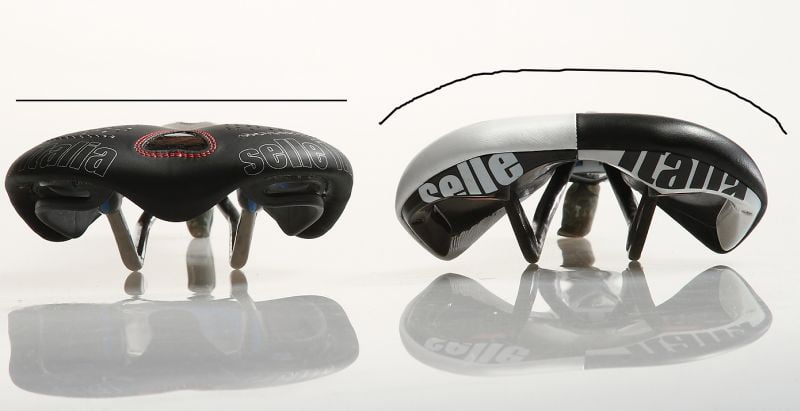
Two studies show why design labels give an incomplete answer. In a 2011 study of 48 competitive female cyclists, the cutout saddles studied were associated with higher adjusted average and peak perineal pressures than traditional designs in that sample. The comparison was observational, so it doesn’t prove that every continuous saddle is better. The original results appear in Guess and colleagues’ saddle-pressure study.
A 2018 ergometer experiment tested three saddles among 19 women, with 20 minutes on each design. Both experimental saddles increased sit-bone discomfort compared with the standard saddle, while crotch discomfort did not differ significantly among designs. The wide experimental saddle also shifted average pressure toward the front and away from the rear. The designs were specific and the sessions short, so the results don’t rank saddles for long outdoor rides.
Should I try a cutout if my sit bones hurt?
A cutout changes contact in the center of the saddle. Sit-bone pain comes from support farther back, so check the rear shape and how you sit on it first.
Could padded shorts, a chamois or skin friction be the culprit?
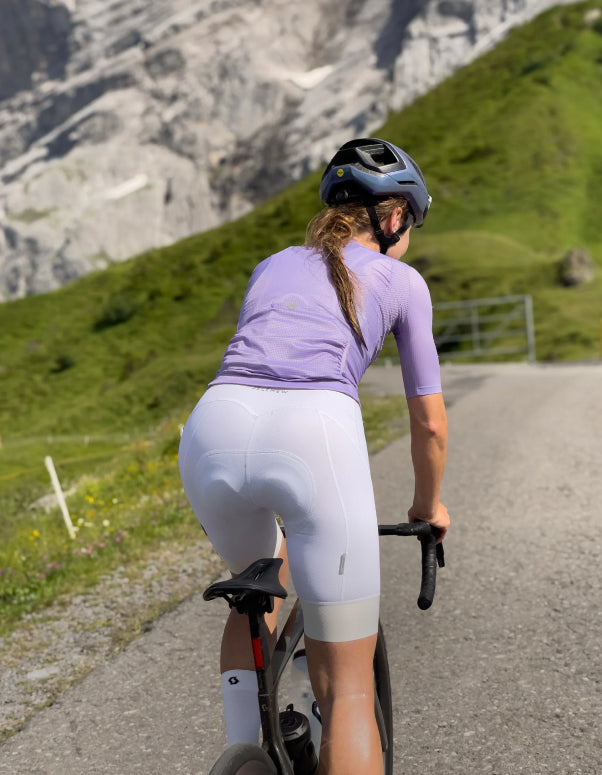
Padded shorts can pinch because of how the chamois meets your body in a riding position. The pad can bunch, sit too far forward or press its edges into an inner-thigh crease. The thickness of the cushioning says little about any of that.
To separate a shorts problem from saddle pressure, Test the saddle-and-chamois combination.
In one discussion among women cyclists, a rider described padded shorts that turned painful on longer rides. Another felt rubbing on one side even after a bike fit. In both cases the useful move is to find the exact patch of contact. A seam, pad edge or fold deserves a look before you replace the saddle.
Inspect the shorts off the bike
- Pad position: Does the chamois sit under the areas it’s meant to cushion in your normal riding posture?
- Bunching: Look for folds or bulky edges near the spot where it pinches.
- Seams and fit: Compare the rubbing spot with a seam, gripper or tight fold of fabric.
- Underwear: Check whether you’re wearing any under padded cycling shorts. The chamois is designed to sit against the skin, and an extra layer adds seams and friction.
- Recent changes: Did the problem start with a new pair of shorts while the bike setup stayed the same?
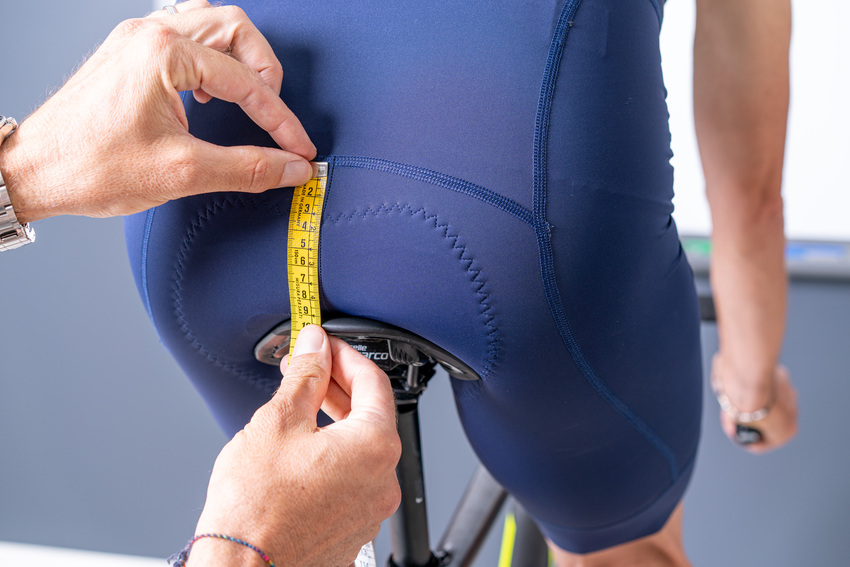
After a ride, change out of damp shorts and keep the area and clothing clean and dry. That limits time in moisture and friction, but it won’t treat a skin infection.
Why a comfortable saddle can start to hurt
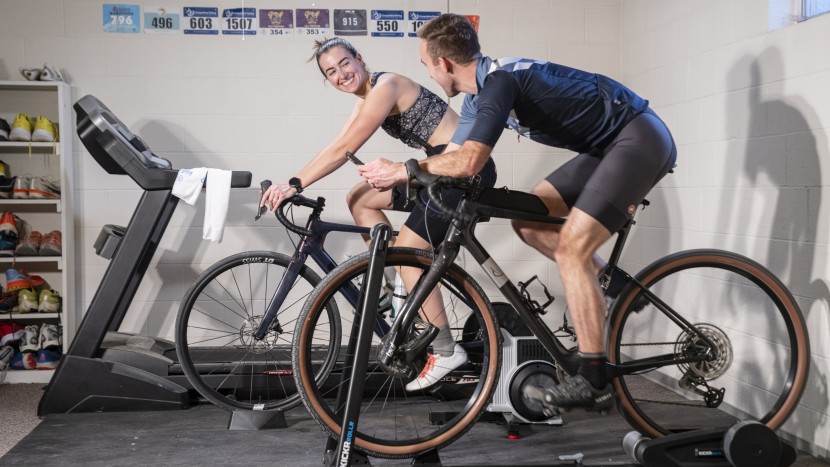
One rider developed numbness on a trainer despite feeling fine outdoors. Compare the two settings. Does your posture change indoors? Are you wearing the same shorts? Does the discomfort begin during a steady effort, or only after a long time in one position? Whichever difference you find tells you which check to run first.
When pain appears later in a ride
Pinching that develops after a while points to repeated fabric contact or a pressure problem that grows as the ride goes on. Write down where and when it starts, along with any clothing or position changes. If it hurts, stop. You don’t need to ride a set distance to confirm the pattern.

When a previously comfortable bike starts hurting
Use the old setup as your reference and check whether your shorts, training habits or bike components have changed. One rider described new pain on a familiar saddle and wondered whether menopause was involved. Circumstances do change, but only a clinician can name a medical cause. A new symptom that continues away from the bike needs an appointment, especially when no equipment change explains it.
Change one thing at a time and check what improved
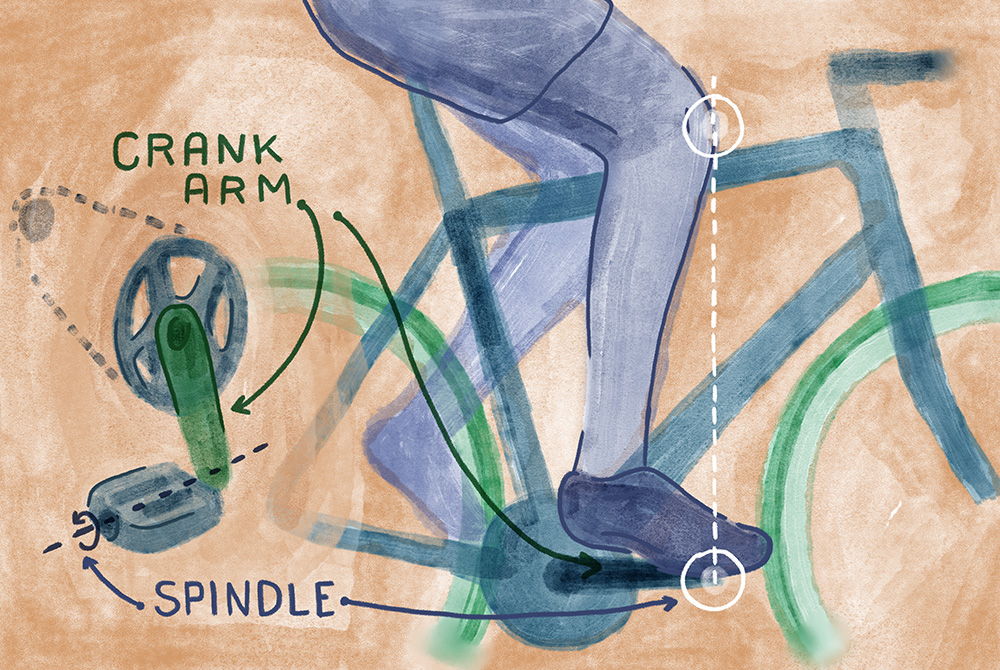
If you’ve already tried different saddles, shorts, creams and fittings, start by writing down what happened. A short log separates your original discomfort from the changes you made in response, and it doubles as the account a fitter or clinician will ask for.
In a 2026 qualitative study, Burnie and colleagues interviewed 20 competitive female cyclists. Participants described varied saddle-sore experiences, expensive trial and error, and difficulty discussing symptoms. Since trial and error costs money, a log is the cheaper place to start.
What to write down
- Location and sensation: Sit bones, vulva, perineum, thigh crease or another precise site, and whether it’s pressure, burning, numbness or visible skin change.
- Onset and context: The start of the ride, later in the session, the indoor trainer, or symptoms that continue afterward.
- Equipment history: Saddle and handlebar changes, shorts and chamois, and any recent change in riding conditions.
- Past attempts: Which adjustments, purchases or fittings you tried and what happened.
Make each comparison worth doing
- Change one factor: Compare shorts, for example, without moving the saddle and handlebars at the same time.
- Use similar conditions: Ride outdoors or on the trainer for both comparisons, so the original symptom has a fair chance to appear.
- Watch other contact points: Record new knee discomfort, hand pressure, chafing or reduced control alongside the original issue.

Keep a change only when the original complaint clearly improves and nothing new appears. Revert any safe, reversible change that makes things worse.
When another saddle or bike fit isn’t the next step
Equipment can’t explain every symptom. A sore that won’t improve and vulvar pain away from cycling both call for a clinician instead of another round of gear changes. Persistent vulvar pain can arise from conditions unrelated to riding. Mayo Clinic’s guidance on vulvodynia describes persistent vulvar pain that requires medical evaluation; a saddle-pressure explanation alone can’t establish the cause.

When a bike fitter is the useful next appointment
If the discomfort stays at the bike contact points and you have no health symptoms, a qualified fitter can review the saddle and handlebars as one setup. That helps most when you’ve tried several saddles or a previous fit left the same pressure or rubbing unresolved. Bring your log. It gives the fitter the specifics, so you don’t have to provoke the pain again.
Before you buy another saddle
Trial and error with saddles costs money, so keep a log first: what changed in your position, saddle or shorts, and what hurt afterward. Keep an adjustment only if the original pain eases without a new one appearing. Recurring numbness, broken skin or pain that follows you off the bike belongs with a doctor, and so does a sore that gets worse.